Wave Ngampruetikorn
Senior Lecturer (Assistant Professor), School of Physics, University of Sydney
vudtiwat.ngampruetikorn `at` sydney.edu.au
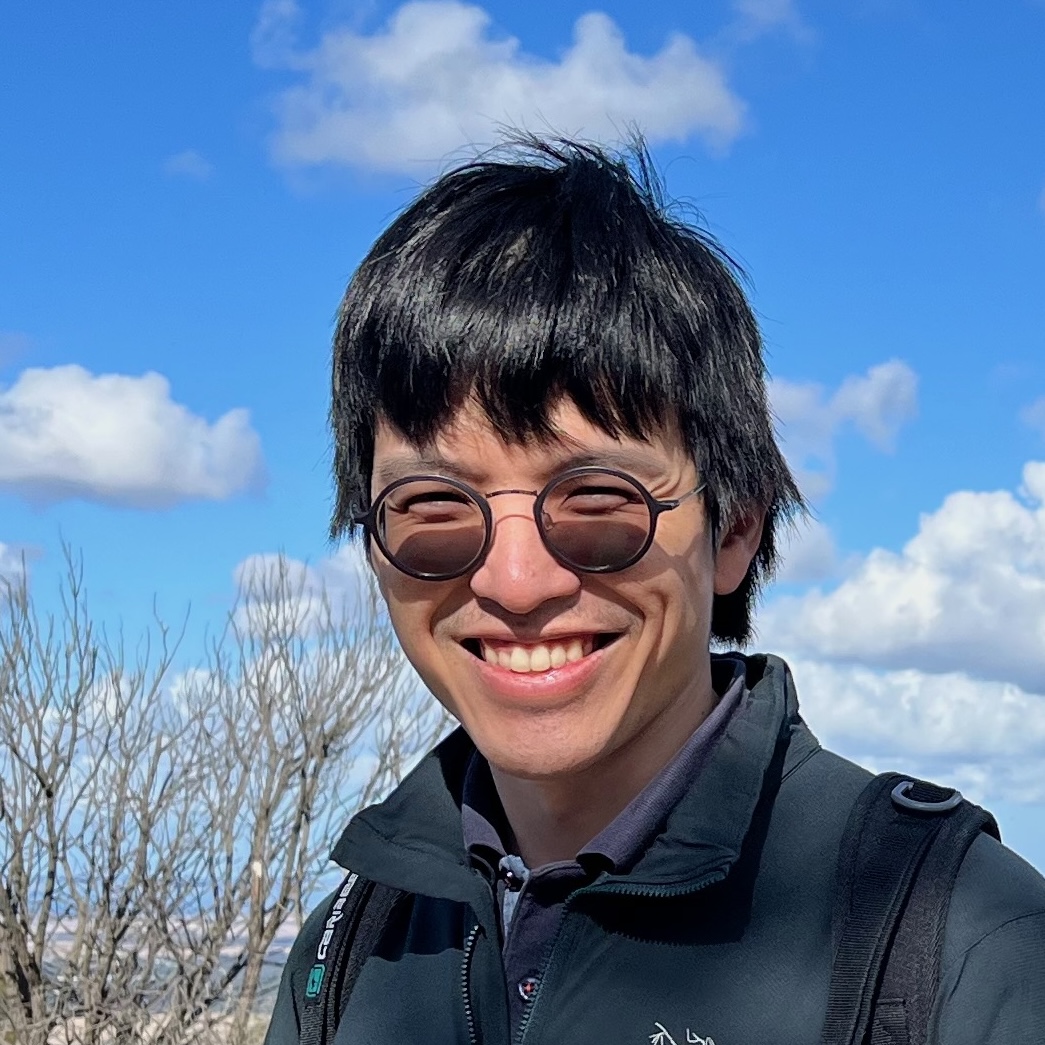
I study learning and intelligence through the lens of physics. My research group blends ideas from statistical physics, information theory and machine learning to understand how intelligent behavior emerges in complex systems like deep neural networks, treating AI systems not as a mere engineering problem but as a new frontier for science. I am particularly interested in the surprising, emergent phenomena of modern AI. Current research themes include the principles behind in-context learning, the universality of neural computation, and the application of physics-motivated concepts like coarse-graining to make AI more interpretable.
I received my PhD in Physics from the University of Cambridge (Theory of Condensed Matter group), followed by postdoctoral research at OIST (Biological Physics Theory Unit), Northwestern University (Condensed Matter Theory group), and CUNY (Initiative for the Theoretical Sciences & Center for the Physics of Biological Function). I am now a Senior Lecturer (Assistant Professor) in the School of Physics at the University of Sydney.
join us! I am looking for motivated and talented PhD students to join the group. If you are passionate about statistical physics, machine learning and understanding the fundamental principles of intelligence (biological or artificial), I encourage you to get in touch.
selected publications
- Data coarse graining can improve model performancePhysical Review E, 2026Featured in Statistical Physics Meets Machine Learning - Machine Learning Meets Statistical Physics collectionReducing data resolution can improve predictions by filtering low-relevance features
- Generalization vs Specialization under Concept ShiftIn Advances in Neural Information Processing Systems, 2025Distribution shift can drive phase transitions in model performance
- When can in-context learning generalize out of task distribution?In Forty-second International Conference on Machine Learning, 2025Pretraining task diversity determines whether models generalize or specialize